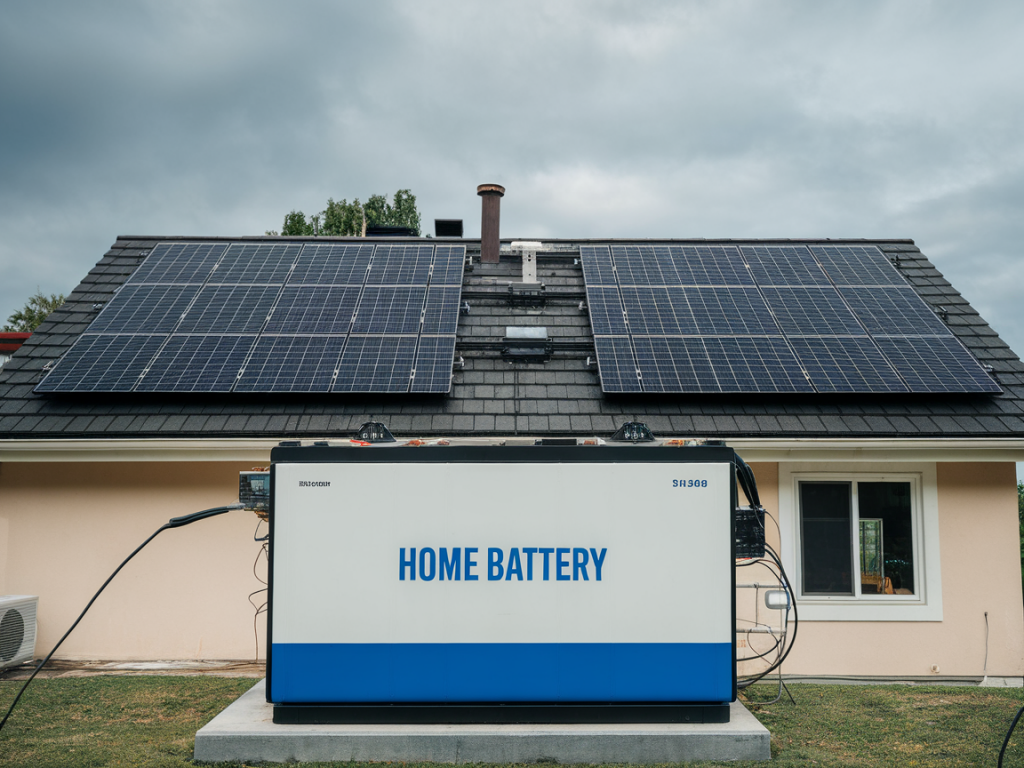
I’ve been following home energy technology for years, and one question I get more than any other is: how much can a home battery actually save you—during a blackout and in everyday use? It’s a great question because the answer depends on a lot of factors: your location, electricity tariffs, the size of the battery and solar array, how you use electricity, and whether you prioritise resilience or bill savings. In this article I’ll walk you through the real-world numbers, scenarios, and trade-offs so you can decide whether a battery is a smart investment for your home.
What a home battery actually does
At its core, a home battery stores electricity so you can use it later. That sounds simple, but there are two distinct benefits:
- Backup power during a blackout: The battery can keep essential circuits running (fridge, lights, Wi‑Fi, medical devices).
- Everyday bill savings: Charge the battery when electricity is cheap or from your solar panels, and discharge when electricity prices are high.
Different systems prioritise these uses differently. Some batteries are optimised for resilience and will reserve capacity for outages; others are designed primarily to maximise financial savings through time‑of‑use (TOU) arbitrage or self‑consumption of solar generation.
Key variables that control savings
Before we dive into numbers, here are the variables that matter most:
- Electricity price structure: Flat rate vs. time‑of‑use vs. demand charges.
- Solar PV presence: Batteries paired with solar often make more sense financially and environmentally.
- Battery size and usable capacity: A 10 kWh battery might give you 8 kWh usable if depth‑of‑discharge and inverter limits are considered.
- Round‑trip efficiency: Losses during charging/discharging (typical 85–95%).
- Backup requirement: Do you need enough power to run the whole house, or just essentials?
- Battery cost and incentives: Upfront cost, installation, and government incentives or grants.
Realistic blackout performance
When people think of batteries for blackouts, they imagine running their entire home for days. That’s possible, but expensive. More commonly, a battery is sized to keep essentials running for a few hours or a couple of days if paired with solar.
Example scenarios (assuming an efficient 85% round‑trip efficiency):
| Battery usable capacity | Typical load covered | Duration |
| 5 kWh | Fridge, LED lights, Wi‑Fi, phone charging (~1 kW) | ~4–5 hours |
| 10 kWh | Fridge, lights, some heating or microwave intermittently (~2 kW) | ~4–5 hours at 2 kW, or longer at lower load |
| 15–20 kWh | Whole‑home backup for smaller homes, or essentials in larger homes | ~8–15 hours depending on load |
Important note: If you have solar, your battery can extend the backup duration significantly during daytime by storing PV generation and using it during evening outages. Systems like Tesla Powerwall, LG Chem (now LG Energy Solution), and Sonnen support hybrid operation so you can combine solar and battery for resilience.
Everyday savings — what to expect
For everyday use, batteries save money mainly through:
- Self‑consumption: Storing excess solar to use later instead of exporting at a low tariff.
- TOU arbitrage: Charging during off‑peak cheap hours and discharging during expensive peak hours.
- Peak shaving: Reducing demand charges for businesses or high‑usage households.
Here are three simplified financial scenarios to give a sense of typical savings. Assumptions: 10 kWh usable battery, round‑trip efficiency 90%, daily cycling where possible.
| Scenario | Context | Annual save estimate |
| Solar homeowner, good export rules | Battery stores 4 kWh/day that would otherwise be exported at low feed‑in tariff; offsets evening consumption at retail rate | £150–£400/year |
| TOU consumer (no solar) | Charge at off‑peak 10p/kWh, discharge at peak 30p/kWh, losses included | £200–£600/year |
| High peak demand household/business | Battery reduces peak charges and avoids expensive import tariffs | £500–£2,000+/year (highly variable) |
These ranges highlight that average households without TOU tariffs and without solar often struggle to achieve payback purely from bill savings. The economics improve when you:
- Have a large PV system generating excess daytime energy.
- Are on a TOU tariff with significant peak/off‑peak differentials.
- Face high export tariffs or demand charges.
Costs and payback
Typical installed costs for a residential battery (2024–2025 UK context) vary: a small system might be £4,000–£6,000, a 10 kWh system £6,000–£10,000 installed, and larger systems proportionally more. Add a PV system and the combined economics change.
Simple payback purely from bill savings for a 10 kWh battery is often 8–20+ years unless you have favourable tariffs or high solar export losses. Many people buy batteries for a mix of resilience and environmental reasons, accepting a longer financial payback.
Practical tips if you’re considering a battery
- Assess your goals: Are you buying resilience, savings, or both? That determines sizing and configuration.
- Model your usage: Use an energy monitor to understand when you consume electricity and how much solar you export.
- Check tariffs: TOU tariffs can make a big difference. Speak to your supplier about export rates if you have or plan solar.
- Look at hybrid inverters: Systems from Enphase, SolarEdge, Tesla, and others offer smart controls that prioritise backup or savings.
- Factor maintenance and warranties: Most batteries come with a warranty of 5–10 years; expect performance degradation over time.
I personally view batteries as a powerful piece of the home energy puzzle—especially when paired with solar. If you live in an area with frequent outages or volatile tariffs, a battery can provide tangible peace of mind and meaningful savings. If your prime motive is pure financial return, do the numbers carefully: sometimes a smaller battery plus energy efficiency measures (LEDs, smart thermostats, better insulation) will deliver faster payback and similar comfort improvements.
At Energy News I keep track of new product releases, changing tariffs, and incentive programmes that can tilt the economics in favour of home batteries. If you’d like, I can run a simple calculation for your case—tell me your daily consumption, whether you have solar, and your tariff structure, and I’ll estimate likely savings and payback.