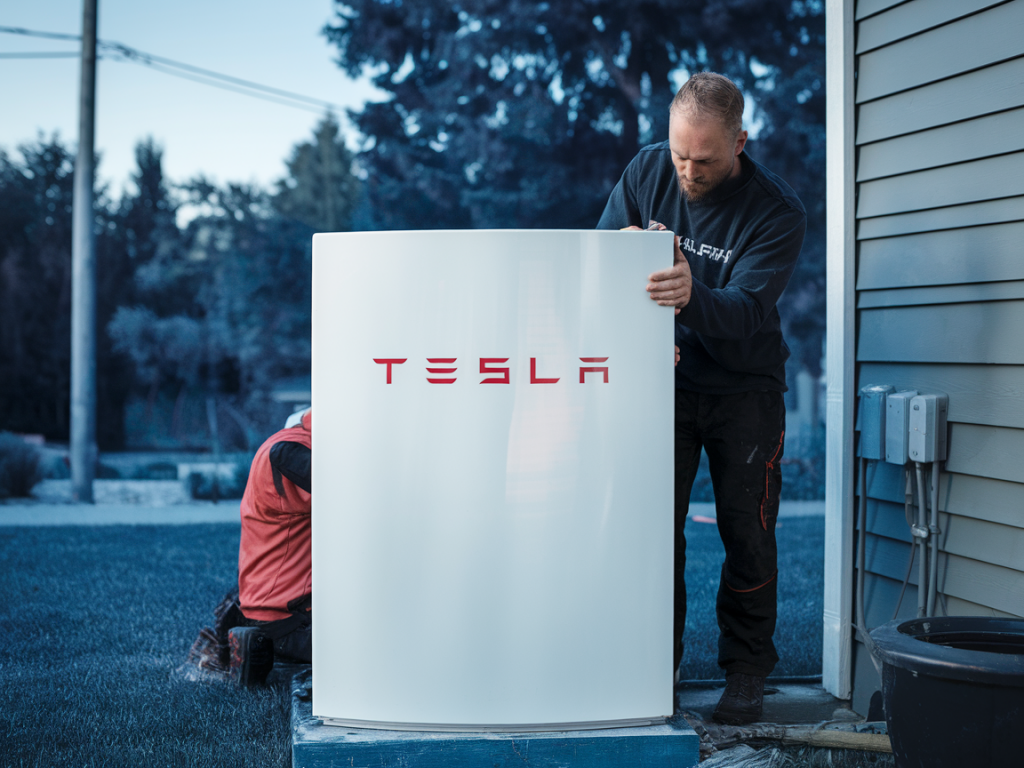
When I walk down the streets of my neighbourhood in the UK as winter approaches, I can’t help but think about the fragility of our power supply. Cold snaps, aging infrastructure, and rising demand put households at risk of blackouts — and every year the same question resurfaces: what is the quickest, most practical way to protect streets and communities? Lately I’ve been exploring a provocative idea: could community battery sharing, built around popular home storage units like the Tesla Powerwall, be the fastest route to keeping lights on?
How community battery sharing with Powerwall would work in practice
At its simplest, community battery sharing is about pooling local energy storage to serve multiple homes rather than one battery per house. Imagine a cluster of houses on a cul-de-sac or a small neighbourhood where several Tesla Powerwalls — installed in homes, micro-sites or near the distribution transformer — are aggregated into a single virtual reserve. When demand spikes or a local outage happens, that shared resource dispatches energy to where it’s needed most.
Practically this requires three elements:
Distributed storage hardware — individual Powerwalls or similar units deployed across the street or in a communal enclosure.Aggregation software — a platform that monitors state-of-charge, forecasts local demand, and controls which battery feeds which property.Grid coordination — agreements with the local DNO (Distribution Network Operator) for fault detection, islanding (temporary disconnection from the wider grid) and safe reconnection.Why Tesla Powerwall is often suggested
The Powerwall is the obvious name that comes up: it’s widely available in the UK, has proven reliability, intelligent energy management via the Tesla app, and integrates with solar generation. Its modular nature means several units can be linked to increase capacity. For a quick deployment, using an off-the-shelf system like Powerwall reduces custom engineering time compared with bespoke battery packs.
Benefits for UK streets — what community members actually care about
Speed of deployment: Leveraging an existing commercial product and installers (e.g., Tesla-certified installers) can be faster than designing a new solution from scratch.Resilience: During a local outage, a coordinated set of Powerwalls can maintain power to critical loads — heating systems, fridges, medical equipment, and communications.Cost-effectiveness: Sharing reduces the per-household capital cost compared with every home buying a battery. Collective procurement can reduce installation overheads.Energy optimisation: Aggregated batteries can balance peaks at street level, reducing the strain on local transformers and potentially deferring costly grid upgrades.Real-world hurdles that slow deployment
Despite the promise, several challenges mean community battery sharing won’t be a magic bullet unless we address them head-on:
Regulatory and connection rules — UK grid codes and DNO practices were not originally designed for shared, dynamically-controlled storage. Permission to operate aggregated storage, export limits, and protection settings can be complex.Ownership and governance — who owns the shared battery? Is it a residents’ association, a commercial aggregator, or a local authority? Clear legal frameworks and contracts are essential.Technical complexity — safely islanding part of a distribution network and ensuring synchronisation when reconnecting requires sophisticated control systems and coordination with DNOs.Cost and financing — while sharing lowers per-household cost, someone must cover CAPEX and maintenance. Financing models (subscription, cooperative ownership, or utility investment) must be viable.What people ask — answered plainly
Will Powerwalls actually keep houses warm during a blackout? Yes, depending on the total stored energy and load profile. A single Powerwall (13.5 kWh usable in older models) can keep essential circuits running for several hours. Shared systems extend that window.Can neighbours with different bills share one battery? They can, but you’ll need a clear agreement on allocation, billing for energy, and responsibility for maintenance.Is it safe to connect batteries across multiple homes? Technically yes, but safety depends on compliant installation, certified hardware, and coordination with the DNO to avoid back-feed risks during faults.How soon could this be scaled up? Pilots can be done within months where willing communities and installers exist. Wider roll-out needs policy support and streamlined connection rules to scale across towns and cities.Comparing solutions for street-level resilience
| Option | Speed to deploy | Cost per household | Resilience level | Complexity |
| Individual home Powerwall | Fast | High | Medium | Low |
| Community-shared Powerwalls | Medium | Medium | High | Medium |
| Large communal battery bank (utility-owned) | Slow | Low | Very high | High |
Examples and pilots to learn from
Across Europe and in parts of the UK there are pilots that aggregate home batteries or use street-level battery cabinets. These pilots teach us about customer engagement, tariff design, and technical integration with low-voltage networks. In many cases, commercial aggregators have partnered with DNOs to trial controlled islanding and peak shaving — lessons we can apply quickly by using established modules like the Powerwall combined with aggregation software from firms such as Octopus Energy’s Kraken platform or independent VPP (Virtual Power Plant) providers.
What needs to change for quick roll-out
Simplified connection processes — DNOs and Ofgem should streamline approvals for community battery projects and publish standard connection templates.Clear business models — incentives for aggregators and local councils to invest in shared storage, including grants or favourable financing.Community engagement tools — templated legal agreements, education materials, and trusted installer networks so residents can launch projects without reinventing governance.Interoperability standards — ensure Powerwall and other batteries can be aggregated with third-party control platforms safely and reliably.I’m optimistic. Community battery sharing, using robust, widely available hardware such as the Tesla Powerwall, can be one of the quickest practical ways to reduce the risk of winter blackouts on UK streets — but it’s not automatic. Speed comes from aligning technology, policy and community action. With flexible pilots, rapid learning cycles and sensible regulation, I believe streets across the UK could start getting much more resilient within a single winter season.