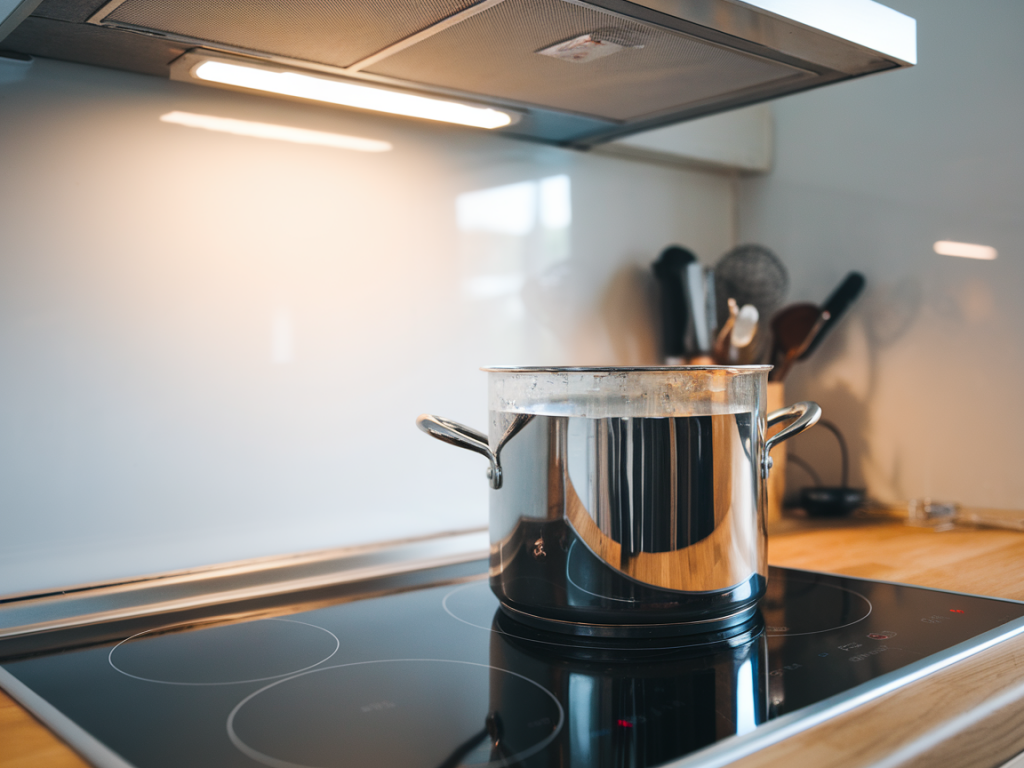
I started thinking about the real climate impact of everyday kitchen choices after we replaced our old gas hob with an induction one and upgraded our extraction system. Friends asked whether the swap was just about convenience and cleaner indoor air — or if it actually made a measurable dent in our home's emissions. I ran the sums, dug into emission factors, and tested plausible scenarios so I could answer that question clearly. Below I share the practical math, assumptions, and outcomes so you can judge what a switch might mean for your home.
Why induction and ventilation matter separately
There are two separate (but related) effects to consider:
Both moves can reduce greenhouse gas emissions, but in different ways: induction reduces combustion emissions and energy losses at the hob; efficient ventilation reduces heating demand and prevents pollutant exposure without wasting heat.
Key assumptions I used (and why)
To make a real-world estimate I used a simple, transparent set of numbers. Change any assumption and the result changes; I show a sensitivity range later.
Simple baseline calculation: switching the hob
Baseline (gas hob):
| Gas energy input (annual) | 400 kWh |
| CO2 from combustion | 400 × 0.184 = 73.6 kgCO2 |
Switch to induction (same useful cooking energy):
| Useful energy needed to cook (approx.) | 400 × 0.40 = 160 kWh (useful heat) |
| Induction input required (at 80% efficiency) | 160 ÷ 0.80 = 200 kWh electricity |
| CO2 from electricity | 200 × 0.200 = 40 kgCO2 |
Direct reduction (combustion CO2 vs electricity CO2): ~73.6 − 40 = 33.6 kgCO2/year.
That’s the simple “direct cooking” number. If you include upstream methane leakage and distribution losses for gas, the gas footprint grows. A commonly used “full-chain” factor for natural gas can be closer to 0.25–0.30 kgCO2e/kWh (varies by region and methodology). Using 0.25 kgCO2e/kWh:
| Gas full-chain emissions | 400 × 0.25 = 100 kgCO2e |
| Reduction switching to induction (full-chain) | 100 − 40 = 60 kgCO2e/year |
What about ventilation — does it undo gains?
This is where nuance matters. A powerful ducted extractor hood that vents outside does remove heat and can increase your heating demand. But the actual effect depends on how often you run it, how well-sealed your home is, and whether you have any heat recovery.
Example: standard extractor adding 200 kWh/year heating demand:
| Extra heating demand | 200 kWh/year |
| If your home heats with gas | 200 × 0.184 = 36.8 kgCO2/year |
| Net effect combined (induction + standard extract) | CO2 from induction 40 + extra heating 36.8 = 76.8 kgCO2 → vs. gas baseline 73.6 => slightly worse or similar |
In other words, pairing induction with a wasteful extraction strategy could erode the emissions benefit — unless you use the extractor sparingly or install a low-loss solution.
Best practice: induction + efficient ventilation (MVHR or low-loss canopy)
There are practical options to keep (or increase) the emissions benefit:
Energy impact example with MVHR saving 300 kWh/year of heating vs. standard extraction:
| Heating saved by efficient ventilation | 300 kWh/year |
| Heating CO2 saved (gas) | 300 × 0.184 = 55.2 kgCO2/year |
| Net CO2 with induction + MVHR | Induction 40 − Heating saved 55.2 = net saving ~15.2 kgCO2 (plus health benefits) |
Combine the full-chain gas factor example: switching from 100 kgCO2e (gas full-chain) to 40 kgCO2e (induction) plus saving 55 kgCO2e from better ventilation gives a total reduction of ~115 kgCO2e/year — a large win.
Sensitivity and practical tips
These results depend heavily on your local grid intensity, how much you cook, whether your home heating is gas or low-carbon electric (heat pump), and how the ventilation is wired and controlled. A few practical tips I learned during our changeover:
If you want, I can run a bespoke estimate for your home: tell me your current cooking fuel, how many hours/week you cook, whether you heat with gas or electric, and whether you have any ventilation system now. I’ll plug in tailored numbers so you can see the likely CO2 impact of different upgrade options.