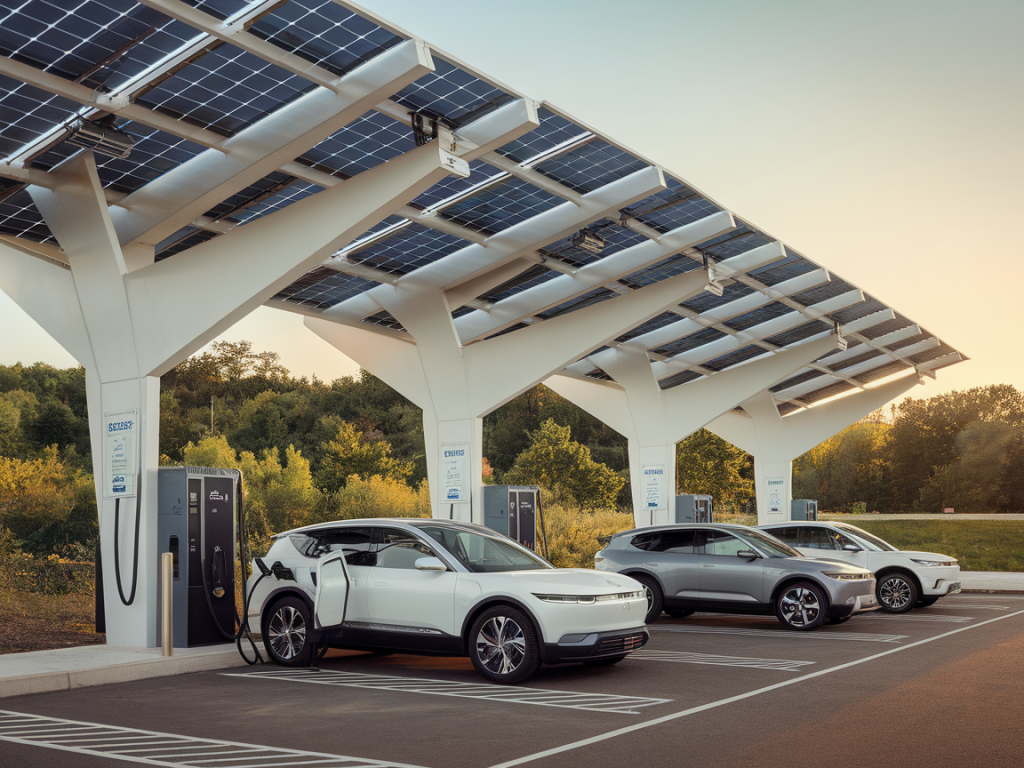
I’ve always loved road trips. There’s something about the open road, changing landscapes and the freedom to stop where you want. As an EV driver and someone who writes about energy, one question keeps coming up: can rapid EV charging hubs be powered entirely by local renewables, and what does that mean for your road trips? I dug into the technology, the economics and real-world examples so I could answer that in a straightforward way.
What does “powered entirely by local renewables” actually mean?
When people say a charging hub is powered by local renewables, they usually mean one of three things:
The site has on-site generation (solar panels, wind turbines, sometimes bioenergy) sized to match or exceed the electricity consumed by the chargers over time.The hub is connected to nearby renewable generation through a private wire or microgrid arrangement, so power is sourced locally rather than from the national grid.The operator procures guarantees of origin or similar certificates to claim renewable supply even if the electrons come from the wider grid.Only the first two meet the strictest interpretation of “entirely local”. That’s the version I focus on here: on-site or directly connected local renewables combined with on-site storage and smart control.
Is it technically possible?
Short answer: yes, but it’s complicated. The technology components exist today:
Renewable generation: rooftop and ground-mounted solar PV are mature and drops in cost make them the obvious first choice for many sites. Small-scale wind can complement solar in windy corridors.Battery energy storage systems (BESS): batteries smooth the mismatch between when renewable energy is produced and when EVs need fast charging. They also provide short bursts of high power required by multiple simultaneous fast chargers.Power conversion and management: DC fast chargers, smart inverters, microgrid controllers and software platforms (many provided by companies like Nuvve, Sonnen or ABB) coordinate generation, storage and load.Demand management: smart queuing, queuing fees, variable pricing and vehicle-to-grid (V2G) can reduce peak demand and help balance the system.Some pilot projects already demonstrate this. Fastned and Ionity in Europe, for example, have installed solar canopies and batteries at several sites. In California, Electrify America has trialled solar-plus-storage to reduce grid demand at busy fast charging hubs.
What are the main challenges?
Making a hub fully local-renewable at a practical level brings several constraints:
Intermittency: Solar and wind output varies. To reliably serve high-power demand spikes (like several cars charging at 150–350 kW at once) requires substantial storage or oversized generation, both of which increase cost and land use.Space and siting: Rapid chargers and battery banks take space. Solar needs area too — roughly 1 MW of solar needs around 2–4 acres depending on technology and layout. That’s feasible at highway rest stops but tougher in dense urban sites.Upfront costs: Batteries and additional infrastructure add capital expenditure. Returns depend on utilisation; busy highways make projects viable, remote low-traffic sites may not.Regulatory and grid services: Connecting a large battery or generator to the local distribution network requires permissions, sometimes new substations or upgrades. In some countries, rules around private wire arrangements and renewable certification are still evolving.Scalability: If every hub tried to be fully local, you’d likely duplicate generation capacity and storage that could be more efficiently shared via the main grid.How do operators get around these challenges?
Rather than relying on a single silver-bullet solution, operators tend to combine approaches:
Solar + batteries + grid backup: Most real-world rapid hubs use solar and batteries to reduce grid draw and provide resilience, but keep a grid connection for reliability and to avoid extreme overbuild.Smart charging & queuing: Software limits peak power per vehicle dynamically so the battery supports load rather than the grid alone. At busy times, vehicles may be limited to slightly lower charge rates to serve more users.Hybrid local supply: Some sites include small-scale wind, fuel cells or biogas for overnight baseload, reducing required battery size.Aggregated services: Batteries at charging hubs can provide grid services (frequency response, demand charge management) to generate additional revenue and justify investment.What does this mean for your road trips?
If you’re planning a road trip in an EV, here’s what local-renewable-powered hubs mean in practical terms:
More sustainable charging: When a hub uses local renewables and storage, the carbon intensity of your charge is lower. That makes long-distance EV travel even greener, especially on routes where grid electricity is carbon-heavy.Greater resilience: On-site batteries and generation can keep chargers working during grid outages — a real advantage in remote areas or during extreme weather.Potential for faster, more reliable charging: Well-designed local systems can deliver high sustained power without causing grid congestion, meaning less waiting and fewer interrupted charging sessions.Variable experience depending on location: Tourist corridors and major highways are more likely to have large, well-equipped hubs. Rural routes may still rely on grid connections or slower chargers.Some added planning: Unless the network is mature everywhere, I still recommend planning charge stops using apps like A Better Routeplanner (ABRP), PlugShare or ChargeMap. Look for hubs that advertise solar+storage or “off-grid capable” to prioritize greener charging.Real examples that matter
I’ve visited a few fast-charging stations that highlight the potential. Fastned’s solar canopies in the Netherlands combine PV with battery buffers to keep chargers online; in the UK and Germany, Ionity partners have trialled energy storage to shave peak demands. Electrify America in the US has deployed solar-plus-storage at selected sites aimed at reducing demand charges and improving reliability.
These aren’t universally off-grid yet, but they show how a hybrid local-renewable model works in practice: meaningful emissions reductions, better resilience and a smoother charging experience for drivers.
What I’d look for before I set off
When I plan a long trip now I pay attention to three things:
Does the charging hub advertise on-site solar and batteries?Is there a mix of ultra-rapid chargers (150–350 kW) and slower chargers so I can be flexible if the site is busy?Can I reserve or at least see real-time availability to reduce waiting time?As more operators combine renewables, storage and smart software, I expect road-tripping in an EV to become not only more convenient but demonstrably greener — and that’s a road I’m happy to drive down.