
Energy Efficiency

Is switching to a home heat pump still worth it with rising electricity prices? a uk homeowner's cost-benefit checklist

Is switching to a home heat pump still worth it with rising electricity prices? a uk homeowner's cost-benefit checklist

Over the past few years I've had countless conversations with homeowners debating whether to switch from gas or oil boilers to a heat pump — and the conversation has only become more complicated as electricity prices have climbed. As someone who follows energy trends closely at Energy News, I want to give you a practical, personal checklist to decide if a home heat pump still makes sense for you in the UK today.

Why this matters now

Heat pumps are widely promoted for their low-carbon heating and high efficiency. But with electricity tariffs rising, many people ask: won’t higher electricity prices wipe out the savings a heat pump promises? My short answer: maybe — but often not. The full picture depends on several factors that I always run through with homeowners: current fuel type, home insulation, local electricity prices and tariffs, the specific heat pump's performance, and available grants.

How heat pumps actually save energy (and where costs come from)

Heat pumps move heat rather than generate it. A modern air-source heat pump (ASHP) or ground-source heat pump (GSHP) can have a coefficient of performance (COP) of 2.5–4.5 in typical UK conditions — meaning for every 1 kWh of electricity used, you get 2.5–4.5 kWh of heat. That efficiency is why heat pumps can still beat gas boilers on running costs despite higher electricity prices.

That said, running cost = electricity price × heat pump electricity consumption. So if electricity costs increase sharply, the running cost rises too. But the comparison must be plus/minus against the price of the fuel you’re replacing (gas, LPG, oil, or electric heating) and the system's seasonal performance (SPF / SCOP), not simply peak COP.

My homeowner cost-benefit checklist

Use this checklist to assess whether a heat pump is worth it for your home. I walk through each item as I would with someone considering the switch.

  • Current heating fuel and price — Replace gas? Oil? LPG? Electric? Fuel price matters. Replacing electric resistance heating is almost always a no-brainer; replacing mains gas depends.
  • Home insulation and heating system — Heat pumps work best in well-insulated homes with lower flow temperatures and underfloor heating or large radiators. If your home is poorly insulated, insulation upgrades should come first.
  • Heat pump type and performance — ASHPs are cheapest to install but slightly less efficient in cold weather than GSHPs. Look at SCOP (seasonal coefficient of performance) rather than a single COP figure.
  • Installation costs and available grants — Typical ASHP installations in the UK currently cost £8,000–£14,000; GSHPs are higher. Check the Boiler Upgrade Scheme (BUS) (or any updated local schemes) for grants (previous BUS provided up to £5,000).
  • Electricity tariff and time-of-use options — If you can shift charging to cheaper overnight hours or put your heat pump on a smart tariff, running costs fall. Consider heat batteries or thermal store strategies if you have variable tariffs.
  • Back-up heating and hybrid options — A hybrid system (heat pump + gas boiler) can reduce electricity use during peak cold snaps, balancing cost and comfort.
  • Maintenance and lifespan — Heat pumps generally last 15–20 years with proper maintenance. Factor in periodic service costs and potential replacements for controls or compressors.
  • Resale and future-proofing — With decarbonisation policies, homes with low-carbon heating will be more attractive to buyers. This non-financial value matters.
  • Simple cost comparison example

    Here’s a straightforward example I use to illustrate the math. Assume an average UK home needs 12,000 kWh of heat per year.

    Scenario Heat pump (SCOP 3) Gas boiler (efficiency 90%)
    Heat required (kWh) 12,000 12,000
    Energy input required (kWh) 12,000 / 3 = 4,000 electricity 12,000 / 0.9 = 13,333 gas
    Unit price (example) 28p/kWh electricity 7.5p/kWh gas
    Annual fuel cost 4,000 × 0.28 = £1,120 13,333 × 0.075 = £1,000

    With these prices, the heat pump appears slightly more expensive (£1,120 vs £1,000). But change any of the variables (higher gas prices, better SCOP, time-of-use tariffs) and the balance shifts. If electricity is 22p/kWh or SCOP is 3.5, the heat pump beats gas on running costs. Also remember a heat pump avoids carbon emissions and may be eligible for grants that reduce upfront cost substantially.

    Factors that shift the balance in favour of a heat pump

  • Good insulation and low-temperature distribution — Lowering the heat demand reduces electricity consumption and improves economics.
  • Higher gas prices or carbon levies — Future gas price increases or carbon pricing make heat pumps relatively cheaper.
  • Smart controls and tariffs — Using economy/on-peak/off-peak or export/import-savvy tariffs (for those with solar) can cut running costs.
  • Grants and finance offers — Upfront incentives like the Boiler Upgrade Scheme or local authority schemes materially shorten payback.
  • Hybrid systems — Pairing a smaller gas boiler or hydrogen-ready backup with a heat pump can reduce electricity at peak demand times.
  • Things that can make a heat pump less attractive

  • Poorly insulated homes — If you cannot reduce heat demand substantially, the system will run more and cost more.
  • High electricity tariffs without time-of-use options — If your electricity is expensive at all times, the running costs rise.
  • Unsuitable property layout — Small radiators or limited outdoor space for ASHP units complicate installation and efficiency.
  • Practical tips from my installs and readings

  • Get at least three quotes from MCS-certified installers and ask for model-specific SCOP and noise data.
  • Insulate first. Loft and cavity wall insulation often offer quicker payback than swapping heating systems alone.
  • Consider a hybrid if you want lower risk during cold snaps — it can be a cost-effective stepping stone.
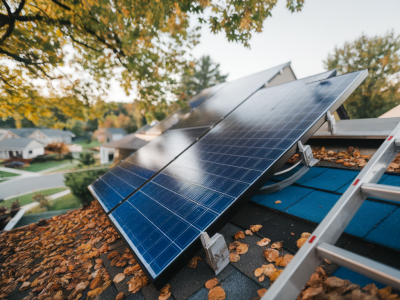
  • Look into pairing a heat pump with rooftop solar PV. Exporting surplus solar to heat your home via a heat pump can dramatically reduce running costs.
  • Ask about smart controls and weather compensation — they improve comfort and efficiency significantly.
  • Deciding whether a heat pump is worth it right now comes down to personal circumstances: your current fuel, insulation level, local prices, available grants, and tolerance for upfront cost. If you want, share basic details about your home (fuel type, annual heating bill, insulation status) and I can run a quick back-of-envelope calculation tailored to your situation.

    You should also check the following news:

    Which retrofit measures deliver the biggest carbon and cost savings for a victorian terraced house
    Energy Efficiency

    Which retrofit measures deliver the biggest carbon and cost savings for a victorian terraced house

    When I moved into a Victorian terraced house a few years ago, I quickly realised that charm often...