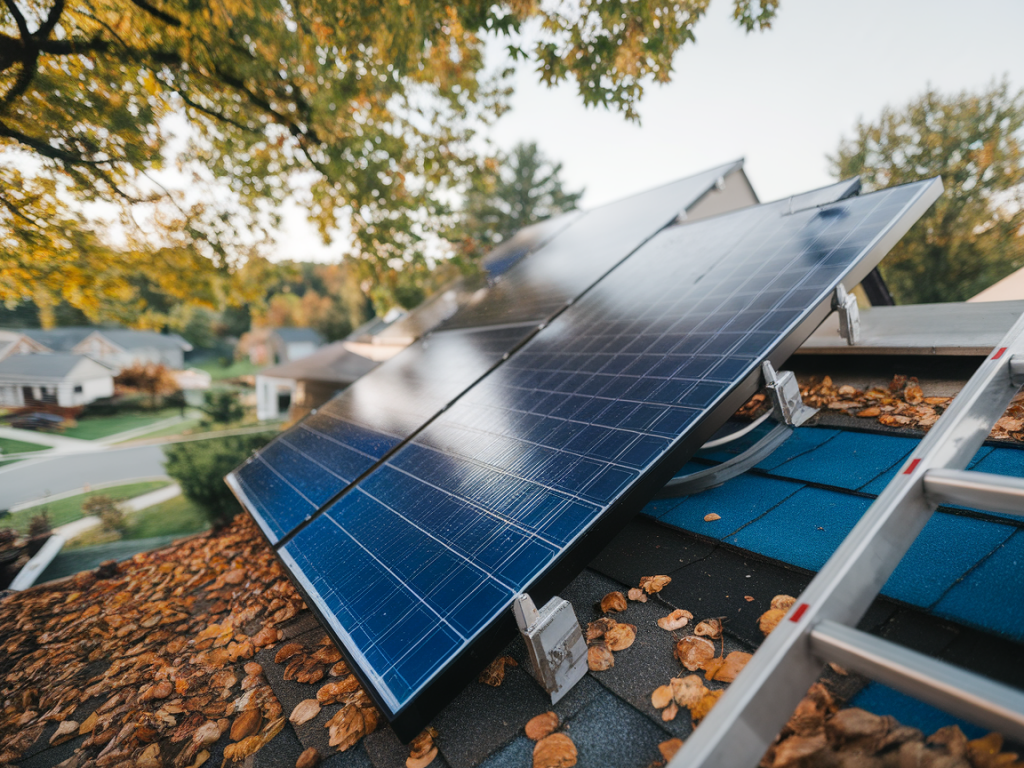
When I first started following perovskite solar panels a few years ago, I was excited by the promise: lightweight, potentially cheaper, and rapidly improving efficiency. As the founder and chief author of Energy News, I’ve since spent a lot of time speaking with researchers, installers, product managers, and homeowners who’ve either installed or considered perovskite-based systems. What I learned is that installers often highlight the positives—and understandably so—but there are important, realistic caveats they don’t always spell out. In this article I want to walk you through the key questions people ask me about perovskite panels: longevity, true costs, and the real installation risks.
What is the realistic lifespan of perovskite solar panels?
Perovskite cells have made headline-grabbing efficiency gains in lab settings, but longevity in the field is a different matter. Traditional silicon panels typically come with 25-year performance warranties and can keep working for 30 years or more. Perovskites, particularly in their early commercial forms, currently lack that pedigree.
From conversations with researchers at universities and with companies like Oxford PV (one of the better-known commercial players in perovskite–silicon tandem technology), I’ve gathered that:
- Hybrid and tandem approaches (perovskite layered on silicon) are the first to reach the market because they combine the durability of silicon with the efficiency boost of perovskite. These are likely to show the longest real-world lifespans initially.
- Pure perovskite modules are more sensitive to moisture, oxygen, heat, and UV exposure. Unless well-encapsulated and engineered, they can degrade faster.
- Manufacturers are improving encapsulation and barrier materials rapidly. Some field trials show promising stability over 5–10 years, but that’s still short of the 25–30-year benchmark buyers expect.
So, when an installer tells you perovskite panels are the future, ask whether they mean pure perovskite modules or tandem solutions. Ask for warranty terms and any long-term field data. If you want a panel that will likely still produce well in 20+ years with minimal concern, silicon remains the safer bet for now.
How much will they actually cost you?
Cost is where the conversation gets tricky. Perovskites promise lower manufacturing costs because they can be made using low-temperature, roll-to-roll processes—potentially similar to printing. That sounds great, but the first commercial products tend to be priced at a premium.
Here’s how the economics break down in practice:
- Initial product price: Early perovskite tandems from established brands can be pricier per watt than mature silicon modules because of limited production capacity and nascent supply chains.
- Installation costs: These are often similar to silicon for roof-mounted systems because labor, racking, inverters, and permits are the same. However, if an installer needs special handling or mounting due to lightweight or flexible modules, labor may be slightly lower or higher depending on complexity.
- Levelized cost of energy (LCOE): If modules maintain higher efficiency and reasonable degradation rates, LCOE could be competitive or even superior to silicon. But that hinges on longevity—if degradation is faster, the LCOE worsens.
To give a quick comparison, here’s a simplified table illustrating relative cost components between standard silicon and current commercial perovskite tandems:
| Component | Silicon | Perovskite Tandem (current commercially available) |
| Module price per W | Low–medium (mature market) | Medium–high (early-stage production) |
| Installation/Labor | Standard | Similar (some special handling possible) |
| Expected warranted lifespan | 25+ years (common) | 5–15 years (varies, improving) |
| LCOE (if longevity proven) | Competitive | Potentially lower (if stability holds) |
What this means for you: if you’re buying today to maximize near-term return or rooftop space, a perovskite tandem might make sense. If your priority is a hands-off, decades-long system with predictable warranties, silicon is still the conservative choice.
What installation risks do installers often omit?
Installers tend to focus on fit, performance, and immediate benefits. Less discussed are a few practical risks that can surprise homeowners:
- Handling and fragility: Some early perovskite modules—especially flexible types—can be more delicate during handling. That can increase the risk of damage during transport or installation, which might not be fully covered by warranty unless documented.
- Environmental sensitivity: Moisture ingress is a big concern. If the module encapsulation fails, degradation accelerates. Installers may not highlight the need for strict moisture barriers in roof flashings or specialized edge sealing.
- Repair and replacement complexity: If a perovskite panel fails after a few years, replacement modules may be expensive or hard to source in some markets. Unlike silicon, there’s less standardization across manufacturers.
- Fire and building regulations: Some jurisdictions are still updating rules to account for new module types. Verify that any perovskite product has been tested for fire safety and local code compliance—installers sometimes assume compliance but it’s your responsibility to ask for certification documentation.
- Warranties and transferability: Ask whether module warranties are transferable if you sell your property. Early-stage companies might have generous warranties but limited track records, making claims handling uncertain down the line.
Questions you should ask your installer (and the manufacturer)
- Is this a pure perovskite module or a perovskite–silicon tandem?
- What is the P50 or degradation estimate per year? Do you provide an expected output curve?
- Can you show independent field data or third-party testing reports (e.g., TÜV, IEC) for outdoor stability?
- What are the exact warranty terms—product, performance, and workmanship—and who handles claims?
- Are there any special installation requirements or handling precautions?
- How easy will it be to replace a panel in 5–10 years? Are replacement parts stocked locally?
We’re at an exciting inflection point. Companies such as Oxford PV, Saule Technologies, and some startups in the US and Asia are pushing perovskite commercialization hard. I’m optimistic—research moves fast and packaging/encapsulation technologies are solving many problems. But optimism should be tempered with practical diligence. Ask the right questions, request documentation, and weigh what matters most to you: short-term performance gains or long-term reliability and predictable economics.
If you’d like, I can follow up with a short checklist you can print and bring to installer meetings, or compile recent independent test reports from trustworthy labs to help you compare specific perovskite products. Just tell me what you plan to prioritize—cost, longevity, or cutting-edge efficiency—and I’ll tailor the resources.