Renewable Energy

Can a pop‑up solar charging hub run a festival entirely on local renewables and how to set one up

Can a pop‑up solar charging hub run a festival entirely on local renewables and how to set one up

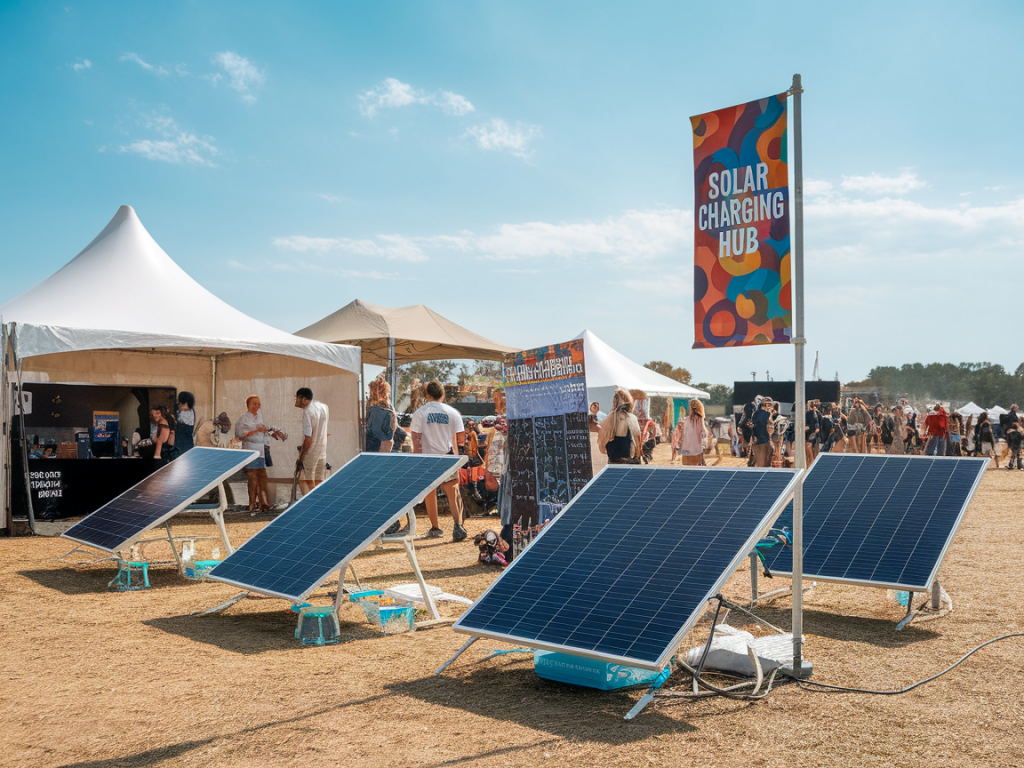
When I first started exploring renewable solutions for events, the idea of a pop-up solar charging hub powering an entire festival sounded ambitious—maybe even impossible. Over the years I've seen small, well-designed systems not only charge phones and laptops, but also support lighting, sound desks, and food vendors. The real question I increasingly hear is: can a pop-up solar charging hub run a festival entirely on local renewables? The honest answer is: sometimes, with careful planning and the right mix of technologies. In this piece I’ll walk you through what’s possible, common pitfalls, and a practical step-by-step on how to set one up.

What do people actually mean by “run a festival”?

Festival organisers mean different things by this. For some it’s powering a small stage and vendor booths; for others it’s zero-grid events where everything—stages, catering, lights, and stalls—must operate off-site without a conventional connection. Before designing any system, be specific about loads:

  • Essential loads (communications, emergency lighting, medical tent equipment)
  • Comfort loads (phone charging hubs, vendor fridges)
  • High-consumption loads (main stages, large sound systems, high-power catering equipment)
  • In my experience, charging hubs and small-to-medium festival needs (up to a few kW continuous) are realistic with local renewables. Large-scale festivals with multiple 10s of kW stages often still need hybrid approaches—solar plus biofuel generators or grid backup—unless they invest in significant battery and panel capacity.

    How much power do festivals use?

    Loads vary wildly. A small community festival might average 5–10 kW. Mid-sized festivals often average 20–50 kW over several hours. Big music festivals can peak at hundreds of kW. To estimate needs, I create a simple load table:

    LoadTypical Power (W)Usage (hours)
    Phone charging hub (20 phones)1,0006
    Small stage (PA & lights)3,000–8,0006–10
    Food stall (fridge + equipment)800–2,0008–12
    Site lighting1,000–4,0008–12

    Do the math for your event: sum the watts × hours to get Wh (watt-hours). That number tells you how much energy you must supply from solar + storage.

    Is a pop-up solar charging hub enough?

    For phone/tablet charging and light loads: absolutely yes. A compact, portable hub consisting of 2–5 kW of solar panels paired with batteries (10–20 kWh) can support thousands of charges across a weekend if managed well. For powering stages and heavy equipment: you’ll need either much larger arrays and battery banks or a hybrid strategy.

    Key factors that determine viability:

  • Sunlight availability and site orientation
  • Battery capacity and power throughput (inverter size)
  • Load management and scheduling (staggering heavy draws)
  • Space for panels (ground area or roof mounts)
  • Components of a pop-up solar charging hub

    A robust, deployable hub will typically include:

  • Solar panels: Mono-crystalline panels are compact and efficient. Brands I’ve seen in festival use include REC, Jinko, and SunPower for high-efficiency needs.
  • Mounting system: Portable rigid frames or foldable ground-mounted arrays. Consider quick-deploy trailers or modular solar mat systems for temporary sites.
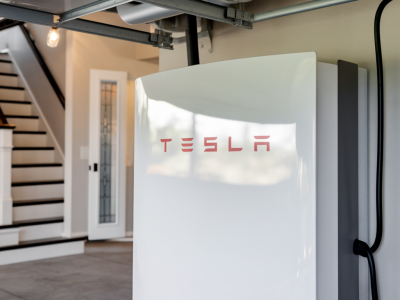
  • Batteries: Lithium-ion (LiFePO4) are preferable for cycle life and weight, with brands like Tesla Powerwall (for bigger installs), BYD, or Victron/Lithium modules for modular setups.
  • Inverter/charger: Pure sine wave inverters sized to peak loads. Hybrid inverters (SMA, Victron, OutBack) let you manage solar, battery, and generator inputs.
  • Charge management & monitoring: An energy management system (EMS) to prioritize essential loads, shed non-critical loads, and display live stats for organisers and vendors.
  • Distribution: Lockable consumer units, RCDs, and clearly labelled circuits for vendor stalls and stages.
  • How to size the system—practical steps

    Here’s the simplified workflow I use when approaching a festival job.

  • Measure/estimate demand: Create a load sheet for every stall, stage, and service.
  • Decide reliability target: 100% renewable off-grid or hybrid with backup?
  • Calculate daily energy required in kWh.
  • Account for site insolation: local sun hours (peak sun hours) determine effective panel output. In the UK you might use 2–4 peak sun hours/day depending on season.
  • Size solar array: required kWh ÷ peak sun hours = panel kW. Add 20–30% for losses.
  • Size battery: desired autonomy (hours or days) × average load = kWh storage. For critical loads include redundancy.
  • Choose inverter with continuous and surge capacities matching peak loads.
  • Example: A weekend market with a 5 kW continuous load over 10 hours/day needs 50 kWh/day. With 3 peak sun hours, you’d need ~17 kW of panels to generate 50 kWh (plus losses), and perhaps 50–100 kWh of battery if you want overnight operation without batteries draining below 20%.

    Operational tips that make or break a deployment

    Technical specs are one thing; operations are another. From my deployments, these practical measures massively improve outcomes:

  • Load control: Use smart power strips and policies—encourage vendors to use efficient induction ovens and LED lighting.
  • Scheduling: Place heaviest loads during daylight and shift non-essential high draws to daytime.
  • Real-time monitoring dashboard: Display generation, storage state, and consumption publicly. It educates attendees and helps manage behaviour.
  • Redundancy: Have portable diesel or biodiesel generators on standby for emergencies or an unexpected weather dip.
  • Training: Train a small technical team to handle simple troubleshooting, battery management, and safety protocols.
  • Permitting, safety and stakeholder buy‑in

    Don’t underestimate the admin work. You’ll need to:

  • Secure site permits and ensure the local authority approves temporary electrical installations.
  • Comply with local electrical codes and have a qualified electrician sign off circuits.
  • Get insurance that covers renewable installations and public liability.
  • Communicate to vendors and performers early about power limits and incentives for energy-efficient setups.
  • Real-world examples and models

    I’ve worked with microgrid providers and seen several successful models:

  • Charging lounges: Solar canopies with integrated batteries that serve as communal charging stations and small-scale power hubs for nearby stalls.
  • Stage hybrid model: Solar + battery for daytime shows with a low-emission generator kick-in for peak evening loads. This drastically reduces diesel use and emissions compared to diesel-only setups.
  • Trailer-based solar arrays: Mobile trailers that arrive pre-wired and can be quickly deployed—useful for touring festivals and pop-ups.
  • Brands and tech I’ve found reliable include Victron Energy for modular inverters and monitoring, Goal Zero and EcoFlow for smaller portable solutions, and modular panels like SunPower Oasis for compact high-output deployments.

    Cost considerations and ROI

    Upfront costs can be significant—panels, batteries, and inverters are capital investments. However, compared to repeated diesel generator hire, solar+battery can become cost-competitive over a few seasons, especially when factoring in fuel, logistics, and carbon pricing. Additionally, green branding and attendee goodwill have marketing value that often isn’t captured in raw ROI calculations.

    If you’re planning a first deployment, start small: a charging hub plus supporting vendor power. Measure consumption, refine operations, then scale. With thoughtful design and flexible operations, a pop-up solar charging hub can do more than charge phones: it can change expectations about what festivals—and events in general—can look like when powered by local renewables.

    You should also check the following news:

    Can tesla powerwall owners legally export stored power to the grid and earn money in the uk
    Renewable Energy

    Can tesla powerwall owners legally export stored power to the grid and earn money in the uk

    I’ve had conversations with dozens of homeowners, installers and energy traders about this exact...

    How to retrofit a 1930s semi for heat pumps and airtightness without losing its character
    Energy Efficiency

    How to retrofit a 1930s semi for heat pumps and airtightness without losing its character

    Retrofitting a 1930s semi for heat pumps and airtightness is one of those projects that feels equal...