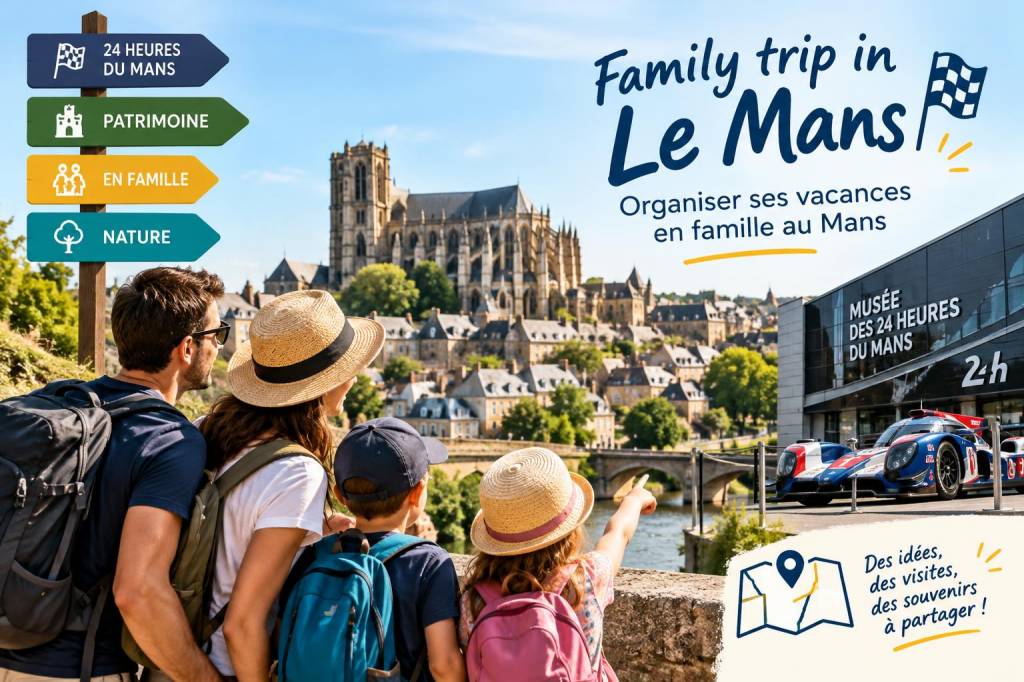
When I think about a family trip in Le Mans, I do not think only about a destination. I think about a rhythm, a pace, and a set of choices that can make travel feel lighter, calmer, and more meaningful. For me, organiser ses vacances en famille au Mans is not just a planning task; it is a way to build a trip that balances comfort, discovery, and responsible habits. That matters to me because family travel can easily become stressful, expensive, and wasteful if it is arranged without a clear structure.
Le Mans has a strong advantage for this kind of trip: it is large enough to offer culture, green spaces, transport options, and family activities, yet compact enough to remain manageable. I like destinations that let me reduce unnecessary driving, choose local services, and keep the trip flexible. In eco living terms, that means fewer transfers, fewer improvised purchases, and more thoughtful use of time and resources.
Why Le Mans works so well for a family stay
Le Mans offers a rare combination of historic character, accessible mobility, and family-friendly space. I value cities where I can walk from one point to another without turning every outing into a logistics problem. In Le Mans, that is realistic in several central areas, especially when I plan with children in mind.
What also stands out for me is the scale of the city. It is not overwhelming like a megacity, but it is not sleepy either. That balance matters because families usually need a mix of stimulation and recovery. I can plan a museum visit, a park break, and a meal without spending half the day in transit. That alone lowers stress and usually reduces the environmental footprint of the stay.
According to the INSEE, Le Mans is home to more than 140,000 residents, which gives it enough density for services while still keeping a local atmosphere. The city also sits within a larger metropolitan area, which means visitors benefit from a broader range of accommodation and transport choices. That is useful when I want to compare family apartments, hotel rooms, or longer-stay options without giving up convenience.
My planning logic for a family stay
When I plan family travel, I always start with four questions: where will we sleep, how will we move, what will we do, and how will we keep the trip sustainable? If I answer those early, the rest becomes easier.
- Sleeping: I look for a space with enough room for luggage, rest, and downtime.
- Moving: I prefer places near public transport or walkable neighborhoods.
- Activities: I choose a mix of indoor and outdoor options to adapt to weather and energy levels.
- Sustainability: I try to limit car use, reduce waste, and support local businesses.
That framework may sound simple, but it saves money and time. It also helps me avoid the common trap of overbooking a family trip. Children often enjoy a better experience when the schedule leaves room for spontaneity, snacks, and rest.
Accommodation choices that make a real difference
Accommodation is usually where I can make the biggest impact on comfort and sustainability. A family apartment often works better than a standard room because it gives me more flexibility around meals, sleep, and laundry. If I can cook even one meal a day, I usually reduce food waste and lower restaurant spending.
I also look at practical details that many travelers ignore at first:
- Kitchen access for breakfast and simple dinners
- Separate sleeping zones for children and adults
- Safe storage for bikes, strollers, or luggage
- Nearby grocery shops or bakeries
- Easy access to tram, bus, or central walking routes
If I stay in a hotel, I prefer one that offers family rooms and clear information about transport connections. For longer stays, I tend to favor serviced apartments or holiday rentals with transparent energy and water policies. Even small things matter: LED lighting, towel reuse systems, and efficient heating can all reduce impact without reducing comfort.
What I would prioritize for children of different ages
Children do not experience a city in the same way at every age, so I adapt my plans accordingly. I have found that a trip becomes smoother when I match activities to attention span and mobility rather than forcing a one-size-fits-all itinerary.
| Age range | Priority | Useful planning choice |
|---|---|---|
| Under 5 | Rest, routine, easy movement | Short outings, parks, early meals |
| 6 to 10 | Discovery, play, variety | Interactive visits, open spaces, snack breaks |
| 11 to 15 | Autonomy, culture, pace | Museums, cycling, independent exploration |
I like this kind of simple matrix because it keeps planning realistic. A family trip is not successful when adults are busy checking boxes. It is successful when everyone gets enough energy to enjoy the stay.
Eco-friendly movement inside and around the city
I always pay close attention to transport because it affects both comfort and sustainability. According to the European Environment Agency, passenger transport remains a major source of greenhouse gas emissions in Europe, which is one reason I try to avoid unnecessary car trips when I can use walking, cycling, or public transport instead.
In Le Mans, I would think in layers. First, I would organize the stay so that essential places are close together. Second, I would use local mobility for short distances. Third, I would only rent a car if I truly need to leave the urban area or travel with heavy luggage.
- Walking works well for central sightseeing and short family outings.
- Tram and bus options help reduce fatigue and avoid parking stress.
- Cycling can be a strong choice for older children and active families.
- Car use makes sense only when the itinerary extends beyond easy public transport.
From an eco living perspective, every avoided car journey matters. It also changes the atmosphere of the trip. Walking through a city gives me time to notice architecture, local shops, public squares, and green corridors in a way that driving never can.
Food choices that support local life
Food is another area where I like to keep the trip both enjoyable and responsible. Family travel often leads to overspending on quick meals, packaged snacks, and last-minute takeout. I avoid that by planning for simple breakfasts and by finding a few reliable local places for lunch or dinner.
My approach is straightforward:
- Buy breakfast items from local bakeries or markets
- Choose restaurants with seasonal menus when possible
- Carry refillable water bottles
- Pack reusable containers for snacks
- Avoid single-use packaging whenever I can
This is not about being strict. It is about keeping the trip pleasant while reducing waste. Families with children know that hunger can reshape an afternoon very quickly, so I prefer to plan around that rather than improvise under pressure.
Family activities I would include in a balanced itinerary
I like itineraries that alternate movement, rest, and discovery. Le Mans offers enough variety for that structure. I would usually organize the stay around a few broad categories rather than an overloaded list of attractions.
- Heritage walks: For architecture, old streets, and city identity
- Parks and open spaces: For breaks, play, and low-cost downtime
- Hands-on cultural visits: For children who enjoy interactive learning
- Local food stops: For a sense of place through taste
- Short excursions: For families who want a change of scenery without exhausting travel
In my view, the most effective family itineraries are the ones that leave visible empty space. That might sound counterintuitive, but empty time is often where the best memories appear. A relaxed coffee stop, an unplanned stop in a park, or a spontaneous detour through a quiet street can matter more than a tightly packed schedule.
What a realistic budget can look like
Budgeting is essential, especially for families. I never want travel costs to grow because of poor planning. A realistic budget for a family stay in Le Mans will depend on season, accommodation type, and transport choice, but a simple framework helps.
| Cost category | Possible savings action | Why it matters |
|---|---|---|
| Accommodation | Book early, compare apartment formats | Better space per euro |
| Transport | Use public transport and walking | Lower spend and lower emissions |
| Food | Mix local shopping with restaurants | Less waste, better control |
| Activities | Blend paid visits with free outdoor moments | More balance, less pressure |
Travel data from Statista and other tourism studies repeatedly show that accommodation and transport are the largest cost drivers for families. That is why I focus on those first. If I improve those two elements, the whole trip becomes easier to manage.
Sources I trust when planning a trip like this
When I want to verify transport, city data, or family travel context, I prefer sources that are factual and regularly updated. These are a few I rely on:
- INSEE for population and territorial data
- French Ministry for Ecological Transition for mobility and environmental policy context
- European Environment Agency for emissions and transport information
- Statista for tourism and travel trend references
Using sources like these helps me stay grounded in facts rather than relying on generic travel claims. That matters if I want the trip to be both enjoyable and aligned with eco living values.
Frequently asked questions I hear from families
Is Le Mans a practical city for children?
Yes, because the city is large enough to offer variety and small enough to remain manageable. That makes it easier to avoid long, tiring transfers.
Can I organize a low-carbon family stay there?
Yes, especially if I choose central accommodation, use walking and public transport, and limit car use to essential trips.
Is it better to stay in a hotel or an apartment?
For many families, an apartment works better because it provides more space, more meal flexibility, and less waste.
What makes a family trip feel less stressful?
I would say four things: short travel times, a realistic schedule, food planning, and enough downtime for everyone.