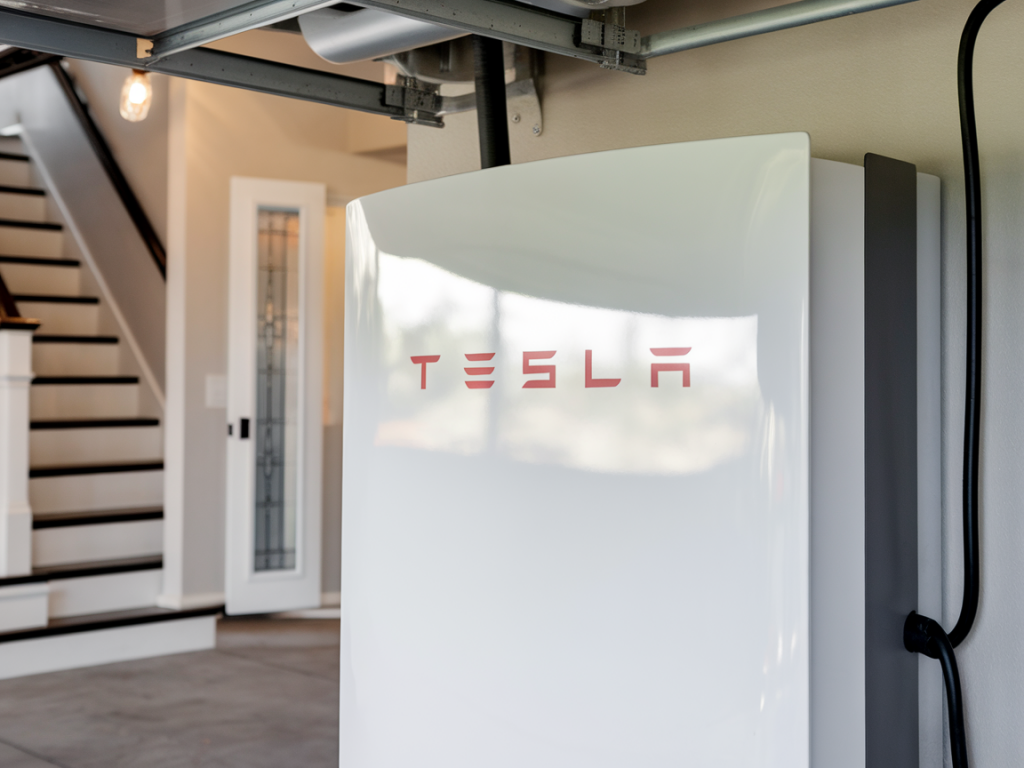
I’ve had conversations with dozens of homeowners, installers and energy traders about this exact question: can a Tesla Powerwall owner in the UK legally export stored power back to the grid and actually earn money from it? The short answer is yes — but with important caveats. In this piece I’ll walk you through the rules, the practicalities, the pitfalls and the best ways to monetise exports from a Powerwall while staying on the right side of UK regulation.
How exports are treated under UK rules
The UK’s Smart Export Guarantee (SEG) is the main policy that allows small generators to be paid for electricity they export to the grid. Introduced in 2020, the SEG requires electricity suppliers above a certain size to offer at least one export tariff to small-scale low-carbon generators.
Key points about the SEG that matter for Powerwall owners:
That last point is crucial. If your Powerwall is charged purely from the grid (e.g., you buy cheap overnight electricity and store it), that exported energy is generally not eligible for SEG payments because it isn’t electricity generated on-site from a qualifying low-carbon source. However, if the Powerwall is charged by your rooftop solar PV, and you then export that stored energy to the grid later, that is typically treated as an export of generated renewable electricity and can be eligible for SEG payments — provided you can evidence the export with the correct metering and your supplier accepts it.
Export metering and evidencing renewables
In practice, suppliers want to see measured exports. Here are the common metering options and the realities for Powerwall owners:
For a Powerwall paired with a solar inverter, you’ll want a configuration where exports are measured after the home export gateway, so the energy you’ve stored and then sent out is captured as exported kWh. If your system uses Tesla’s Gateway and an inverter that reports export properly, most SEG-paying suppliers will accept that meter data — but always check with the supplier beforehand.
Can a Powerwall only (no solar) be paid under SEG?
Short answer: usually not. SEG is targeted at paying for exports from qualifying generation like solar. If your battery is charged entirely from the grid, suppliers are unlikely to pay for exported kWh because it's not renewable generation — it's arbitrage. Paying for exported grid-charged energy would defeat the policy’s purpose.
Legal obligations and registration
There are a few administrative steps and rules you should be aware of:
Alternative and higher-value routes: flexibility and VPPs
Beyond SEG there are increasingly valuable ways to earn from a Powerwall:
Be aware: participation in VPPs normally requires agreeing to a commercial contract and sometimes a third-party control of charging/discharging. That can interact with your warranty or with how you use the battery, so read terms carefully.
Typical tariffs and real earnings
SEG export tariffs vary widely — many are in the region of 1–6 pence per kWh, although some suppliers have offered higher rates during promotional periods. By contrast, flexibility and VPP payments can be several times higher per kWh-equivalent for specific services.
| Route | Typical range | Pros | Cons |
| SEG export tariff | ~1–6 p/kWh (varies) | Simple, regulated | Low rates, requires export metering |
| VPP / flexibility markets | Variable; can be higher for services | Higher potential earnings | Contracts, third-party control, complexity |
| Arbitrage / retail savings | Savings on import costs rather than direct income | Immediate bill savings | Depends on price differentials and battery capacity |
Practical tips if you own a Powerwall
I’ve seen homeowners pleasantly surprised when they combine solar with a Powerwall and the right export/tariff strategy — but I’ve also seen frustrated owners who assumed any exported kWh would automatically translate to cash. The difference almost always comes down to metering, the source of the energy (grid vs solar), and whether you plug into value streams beyond the basic SEG.