When the lights go out, most of us instantly think about candles, portable chargers and whether the food in the freezer will survive. But increasingly, I find myself thinking about the car in my driveway. Modern electric vehicles (EVs) aren't just transport anymore — many can act as mobile batteries. In this piece I’ll explain what really happens to an EV when the grid fails, how you can use your EV as a backup power source, the practical limitations, and what to consider if you’re thinking of turning your car into your household generator.
EVs and grid failure: basic behaviours
First, some clarity: when the grid fails, an EV doesn't magically power your home by default. Most EVs are designed with safety features that isolate the vehicle from the grid during outages to protect utility workers and prevent backfeeding. So if your neighborhood loses power, your EV will typically be prevented from feeding electricity back into your home's circuits unless you have a system specifically designed for vehicle-to-home (V2H) or vehicle-to-grid (V2G) operation.
Here’s what typically happens:
- The vehicle’s onboard systems detect grid loss (or the dedicated bidirectional charger does) and disconnect the car from the external electrical network.
- The EV remains charged and capable of driving, so your mobility is generally preserved.
- Without additional hardware (bidirectional charger, inverter or dedicated V2H interface) you can’t easily tap into the battery to power household appliances.
Vehicle-to-home (V2H) and vehicle-to-grid (V2G): what they mean
I like to break these into two practical categories:
- V2H (Vehicle-to-Home): The EV supplies electricity directly to your house, usually during an outage or to reduce peak demand. This requires a bi-directional inverter or a built-in capability and often a home integration system.
- V2G (Vehicle-to-Grid): The EV supplies electricity back to the distribution grid to support grid stability, often coordinated by the utility and used for demand response or ancillary services.
V2H is the scenario most homeowners care about during a blackout. V2G is primarily a grid-level tool that can also benefit owners via payments or lower tariffs, but it’s usually managed by utilities or aggregators.
How to use an EV as a backup power source today
If I want my EV to power my home in an outage, there are a few realistic routes:
- Built-in bidirectional capability: Some EVs — notably the Nissan Leaf (with CHAdeMO in some markets), certain Mitsubishi models, and more recently some Ford and Rivian models — either support or are moving toward bidirectional charging. Models like the Ford F-150 Lightning, for instance, include an integrated power inverter that can run tools or feed a house when coupled with the right setup.
- Aftermarket bidirectional chargers/inverters: Companies such as Wallbox (with Quasar) and Zappi are developing or selling hardware that enables bidirectional flow. These require compatible EVs and professional installation.
- Portable inverter solutions: Some EV owners use a portable inverter connected to the 12V system or via a dedicated accessory outlet in the car. This can power low-power devices but is not a safe or recommended approach for whole-home backup without proper isolation and transfer switching.
What you need to set up V2H safely
Turning your EV into a home backup involves more than plugging in an extension lead. Here are the essentials I’ll always check before attempting anything:
- Bidirectional capability: Confirm your EV supports discharging to an external load. Check the owner manual and technical specs.
- Bidirectional charger/inverter: You need hardware that can convert DC battery power to AC for home circuits and manage safe isolation during grid events.
- Automatic transfer switch (ATS): This device isolates your home from the grid and switches power to the EV source safely and automatically during an outage.
- Professional installation: Grid interconnection, safety switches and correct wiring are essential. Don’t jury-rig a system — you could endanger utility crews and your home.
- Regulatory approvals: Some utilities and jurisdictions require notifications or approvals for V2G/V2H systems; check local rules.
How much power can an EV realistically provide?
Not all EVs are equal. The usable energy and power output depend on battery capacity and the vehicle’s discharge limits. Here’s a quick comparative table to give a sense:
| Example EV | Battery Capacity (kWh) | Typical Usable % | Usable Energy (kWh) | Typical Power Output (kW) |
|---|---|---|---|---|
| Nissan Leaf | 40–62 | 80% | 32–49 | 3–6 (CHAdeMO) |
| Ford F-150 Lightning | 98–131 | 85% | 83–111 | 2.4–9.6 (home power) |
| Tesla Model S | 75–100 | 80% | 60–80 | Varies — requires adapter/hardware |
As an example, a 60 kWh usable battery could theoretically supply a modest household drawing 3 kW for roughly 20 hours. In practice, you’d reserve a margin so you can still drive and to protect battery life.
Battery degradation and financial considerations
One frequent concern I hear is: “Won’t using my EV as a home battery wear out the battery faster?” The short answer: it can, but modern batteries and battery management systems (BMS) are sophisticated. Cycling the battery does contribute to wear, but controlled shallow cycles (e.g., discharging 20-30% during outages) have a smaller impact than repeated deep discharges.
Cost-wise, installing a bidirectional charger and ATS can be several thousand pounds, but you should weigh that against regular backup generator costs, potential savings from peak shaving, and incentives. Some pilots and utility programs even pay EV owners for V2G services, offsetting costs.
Practical tips if you want to use your EV as backup
- Check your vehicle’s manual and reach out to the manufacturer to confirm V2H/V2G support and any recommended settings.
- Work with a certified electrician experienced in EV charger installs and ask about ATS and interlock mechanisms.
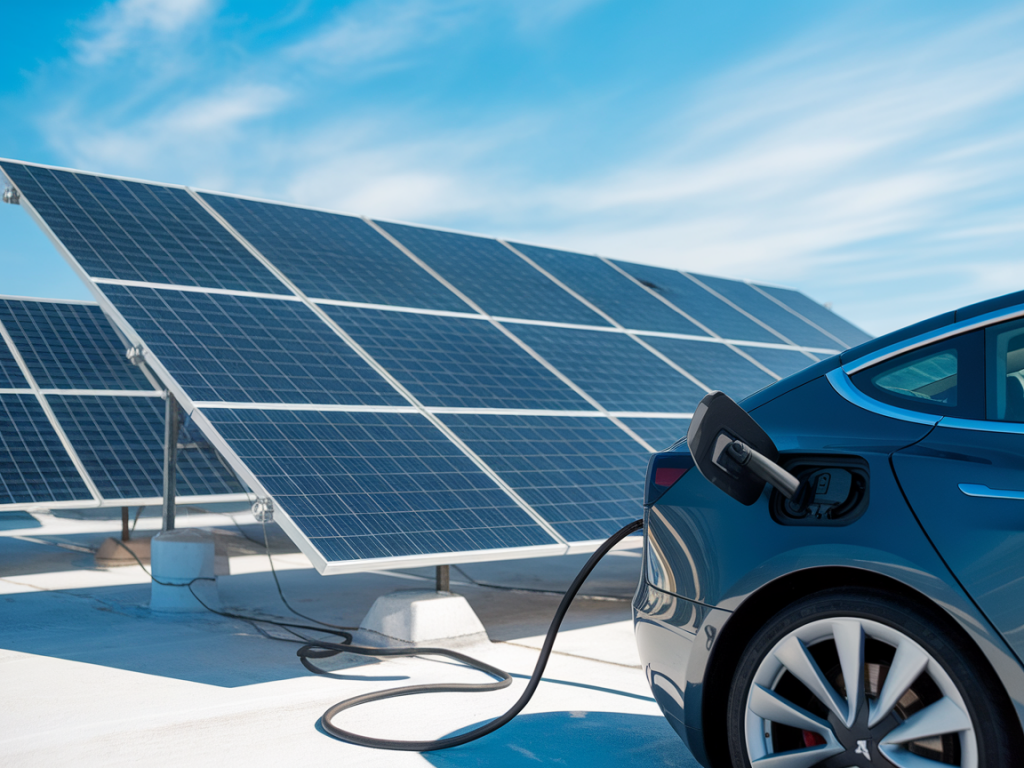
- Consider a hybrid approach: pairing solar panels, a home battery (like a Tesla Powerwall or LG Chem), and an EV can provide resilience and flexibility.
- Keep your EV well charged if you live in an area prone to outages — even without V2H, your mobility is a critical emergency resource.
What the future looks like
I’m optimistic. Automakers, utilities and tech companies are investing heavily in bidirectional charging and standards that will make V2G/V2H more seamless. As protocols mature and incentives align, the EV-as-backup model will become more accessible and cost-effective, especially when paired with home renewables.
For now, if you’re curious, start by researching whether your EV model supports bidirectional charging and talk to local installers. With the right setup, your car can become more than transportation — it can be a lifeline when the grid falters.