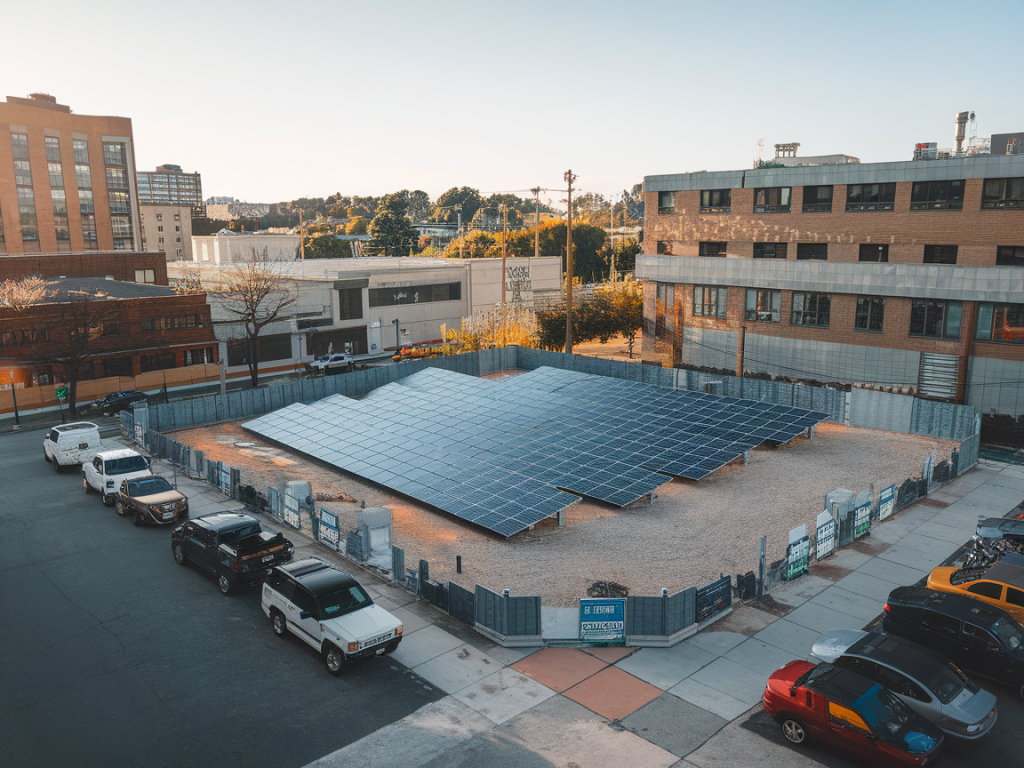
I’ve long been fascinated by how small, local projects can ripple into broader change. Turning vacant lots into neighborhood microgrids powered by solar and battery storage is one of those high-impact, scalable ideas. It’s practical, visible, and—crucially—anchored in community needs. Below I share a step-by-step guide based on what I’ve seen work: from initial scoping and community buy-in, to technical design, financing, permitting, and long-term operation.
Why vacant lots make great sites for microgrids
Vacant lots are underused assets in many cities. They often sit near the communities that need resilience the most, have fewer conflicts around shading and access, and can be transformed relatively quickly. A solar-plus-storage microgrid on a lot can provide:
Step 1 — Start with community engagement and needs assessment
Don’t begin with technology. Begin with people. I always start by talking to neighborhood associations, local businesses, faith groups, and municipal planners. Key questions to answer:
Early workshops help build trust and clarify expectations. If residents see direct benefits—like guaranteed power for a community fridge during storms—they become champions.
Step 2 — Site feasibility and constraints
Once there’s local support, evaluate the lot. Important checks include:
Step 3 — Define the microgrid’s purpose and scale
Microgrids vary widely. Decide whether the goal is resilience-focused (islanding during outages), cost-saving (peak shaving and time-of-use arbitrage), or both. Typical sizing considerations:
Here’s a quick illustrative table of typical storage choices and suitability:
| Battery Chemistry | Best for | Typical Lifespan | Cost Considerations |
|---|---|---|---|
| Lithium-ion (NMC/LFP) | High energy density, fast response, good for daily cycling | 8–15 years (dependent on cycling) | Moderate to high upfront cost, declining |
| Lead-acid | Low-cost, short-term backup | 3–7 years | Low upfront, high maintenance |
| Flow batteries | Long-duration storage with many cycles | 10–20 years | Higher complexity and capex |
Step 4 — Technical design and system architecture
Work with an engineer or experienced installer to design the system. Key components include:
I recommend specifying systems that support modular expansion—start with a core system sized for a realistic budget and leave space to add capacity as funds or demand grows.
Step 5 — Model economics and explore financing
Community microgrids can be financed through blended capital: grants, municipal funds, community investment, and third-party ownership models. Some avenues I’ve seen work well:
Run a simple cash flow model that includes energy savings, revenue streams (if selling demand response or grid services), O&M, replacement reserves, and potential revenue during outages (e.g., renting space to a refrigerated vaccine cabinet). Transparency with the community about finances builds trust.
Step 6 — Permitting, interconnection, and legal structures
Permitting processes differ across cities, but common steps include zoning clearance, building permits for electrical and structural works, and interconnection agreements with the utility. Tips:
Step 7 — Procurement and contracting
Choose vendors with proven experience in community-scale projects. Some procurement approaches:
Include community hiring or apprenticeship clauses in contracts to maximize local benefits.
Step 8 — Construction, commissioning, and testing
Construction on vacant lots can be fast but requires careful site management. During commissioning, prioritize:
Run a public demonstration day post-commissioning—show residents how the microgrid works and what it delivers during an outage.
Step 9 — Operations, maintenance, and resilience planning
Long-term success depends on reliable O&M and clear governance. Key practices I recommend:
Step 10 — Measure impact and iterate
Track metrics: kWh generated, hours of islanding, critical loads served, local jobs created, and greenhouse gas reductions. Share findings publicly—municipalities and funders love real-world data. Use feedback to scale the project or replicate it on neighboring lots.
Turning vacant lots into microgrids is both a technical and social project. When done right, these installations offer resilience, clean energy, and tangible community benefits. If you’re starting a project in your city and want pointers on stakeholder engagement templates, sample RFP language, or model financial spreadsheets, I can share resources and examples I’ve used.