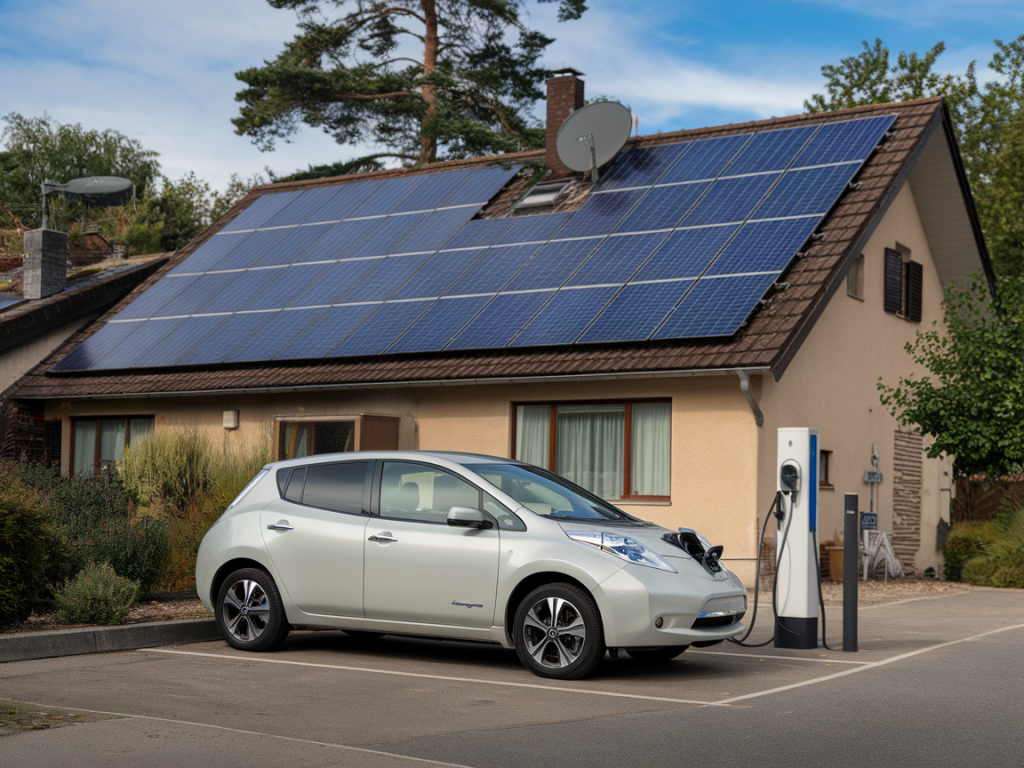
Installing a Vehicle-to-Home (V2H) system on a Nissan Leaf felt, for me, like unlocking a new dimension of what an electric car can do. Instead of being just a mode of transport, the Leaf becomes a mobile battery that can power your home during outages, shave electricity bills, and help balance household loads. In this piece I’ll walk you through the practical steps I took (and the pitfalls I learned to avoid) so you can approach your own install with confidence.
Why the Nissan Leaf?
I chose the Nissan Leaf because it’s one of the most common EVs with a proven AC bidirectional capability (depending on model and inverter). The Leaf’s CHAdeMO charging port supports bidirectional energy flow when paired with the right inverter and control system. Newer EVs and adapters use CCS or proprietary solutions, but for many owners the Leaf remains one of the most accessible V2H candidates.
What you need to know before you start
First and foremost: V2H involves high-voltage electricity and grid interaction. I’m not an electrician, so I recommend engaging a certified installer early. That said, here are the key elements you’ll need to consider and understand:
Vehicle compatibility: Not all Nissan Leafs are equal. My 2018 Leaf worked nicely because it supports CHAdeMO and has a compatible battery management system. Check your Leaf’s model year and confirm bidirectional capability with the manufacturer or specialist forums.Inverter type: You need a bidirectional inverter that can convert DC from the car to AC for your home and vice versa. Popular options I researched include products from companies like KOME, eMotorWerks in the past, and third-party CHAdeMO to AC solutions (e.g., GIVe or Mitsu’s solutions in some markets). Make sure the inverter you choose explicitly supports CHAdeMO V2H.Charger/adapter: A CHAdeMO adapter or a compatible EVSE that supports bidirectional currents is essential. The Leaf uses CHAdeMO; adapters that try to convert CHAdeMO to CCS often don’t support bidirectional flows.Electrical panel and safety: Your home panel must be able to accept an inverter input safely. You will likely need an automatic transfer switch or an inverter with built-in islanding detection so the system isolates from the grid during outages.Permits and regulations: Local electrical codes and utility regulations vary. Some utilities require notification or an export agreement if you feed the grid; V2H often requires anti-islanding and safety certifications.Step-by-step: How I prepared and installed my V2H
Here’s a condensed version of how I approached the project. Your specifics may vary—especially with local rules and the exact hardware—but this will give you a practical roadmap.
Research and planning: I started by confirming my Leaf’s compatibility, then researched bidirectional inverters compatible with CHAdeMO. I read owner forums, manufacturer documentation, and utility guidance to make sure I had the right parts and permits.Choose an installer: I spoke to three licensed electricians with EV experience. The winning installer had prior V2H conversions and a plan for the transfer switch and safety interlocks. If you can’t find a specialist, look for an electrical contractor with renewables or battery storage experience.Purchase hardware: I bought a CHAdeMO-compatible V2H inverter, a CHAdeMO cable, and an automatic transfer switch. Brands and models change quickly, so look for units certified for your country—CE, UL, or equivalent. I documented serial numbers and warranties carefully.Electrical upgrades: My panel needed a sub-breaker for the inverter and a safe method to isolate the point of connection. The installer added a dedicated breaker and the transfer switch so the inverter can disconnect from the grid when needed.Install and commissioning: The electrician installed the inverter near my panel, wired the transfer switch, and connected the CHAdeMO cable interface. We tested islanding functions, emergency shutoffs, and monitored the first full cycle. The installer and I verified that when the grid cuts, the system isolates and supplies critical circuits only.Monitoring and software: The inverter came with a monitoring app that allowed me to schedule V2H charging, set export limits, and check battery health. I connected the system to Wi‑Fi and configured push notifications for faults.Common pitfalls and how to avoid them
I made a few mistakes along the way, and I want to save you the trouble:
Assuming all Leafs are V2H-ready: Not every Leaf model or state of health supports bidirectional flows. Confirm before you buy hardware.Underestimating wiring and panel work: My initial estimate didn’t include a panel upgrade. Budget for possible upgrades and a transfer switch.Ignoring utility requirements: One utility required a simple notification; another requested grid-interconnection approvals. Check early to avoid delays.Poor cooling and placement: Inverters generate heat. My installer initially placed the unit in a poorly ventilated space; I had to move it to avoid thermal throttling.Not planning loads: V2H will power selected circuits, not necessarily your whole home. Use a load plan to prioritize essentials like refrigeration, heating, and communications.What I recommend you prioritize
Critical load panel: Create a sub-panel for critical circuits. That ensures V2H supplies the most important loads during an outage.Battery health monitoring: V2H cycles your EV battery more. Use monitoring tools and conservative depth-of-discharge settings to protect battery longevity.Smart scheduling: Schedule charging when tariffs are low and schedule discharging for peak price windows. Many inverters have tariff-aware features.Insurance and warranties: Check whether your car warranty or home insurance is affected. Some warranties may have language about third-party bidirectional use; keep documentation from the inverter manufacturer.Quick comparison: common V2H hardware considerations
| Component | Why it matters | My tip |
| Bidirectional inverter | Converts between DC (car) and AC (home/grid) | Buy a model with anti-islanding, Wi‑Fi, and a good warranty |
| CHAdeMO cable | Physical connection to the Leaf | Use OEM or certified aftermarket cables rated for bidirectional use |
| Transfer switch | Isolates home from grid during islanding | Choose automatic switches that match your panel size |
| Monitoring software | Manages charging/discharging schedules and alerts | Look for tariff integration and battery health features |
Final practical tips from my experience
Talk to other Leaf owners in community forums—real-world tips are invaluable.Keep an emergency manual disconnect in an easily accessible place.Start with conservative discharge limits (20–40% depth-of-discharge) to preserve battery life.Log performance and any error codes for the first months to spot issues early.Consider a hybrid approach—use home solar plus V2H to increase resilience and reduce cycles on the car battery.Installing a Nissan Leaf V2H system transformed how I think about home energy resilience and cost management. It’s not completely plug-and-play, but with the right planning, a reliable installer, and awareness of regulatory requirements, it’s an achievable upgrade that can pay dividends—both financially and for your peace of mind.