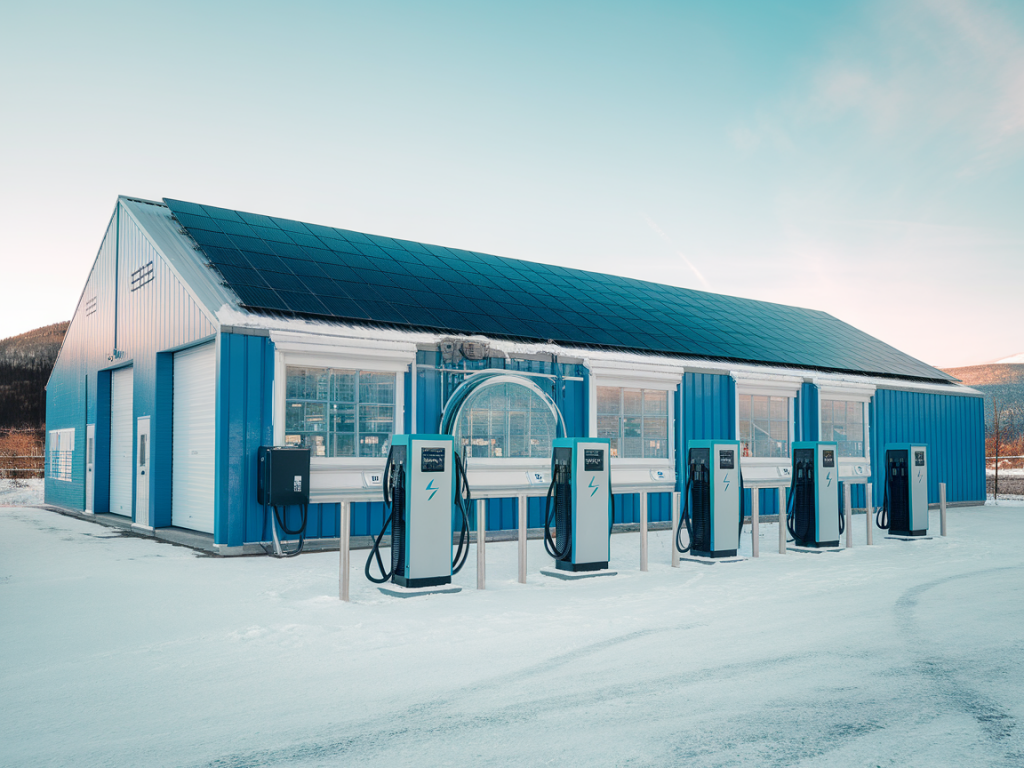
I’ve been thinking a lot lately about one of the most overlooked opportunities in the energy transition: supermarket cold stores. These facilities already consume large amounts of electricity, require reliable power for refrigeration, and often have sizable roof and yard spaces. What if they could become profit-making battery hubs by integrating second-life electric vehicle (EV) batteries? In this piece I’ll walk you through why this makes sense, how it can be done, what questions you should ask, and the tangible benefits for retailers, grid operators, and the environment.
Why cold stores are ideal for second-life EV batteries
Cold stores are energy-intensive facilities that need continuous, often predictable power. Refrigeration loads are relatively stable and sometimes predictable by time of day or day of week, which aligns well with battery storage use cases such as peak shaving, demand charge reduction, and load shifting. Here are a few reasons this synergy is compelling:
What are second-life EV batteries and why use them?
Second-life EV batteries are used batteries from electric vehicles that have degraded too much for automotive use (typically below ~80% state-of-health) but still retain sufficient capacity and cycle life for stationary applications. Rather than recycling them immediately, these batteries can be repurposed for several years of useful service in energy storage systems.
Real-world use cases at cold stores
Below are practical ways cold stores can monetize second-life batteries:
Common questions people ask — and my answers
“Are second-life batteries safe for commercial refrigeration operations?”
Safety is paramount. Second-life systems require rigorous testing, repackaging, and battery management systems (BMS) to monitor state-of-health, temperature, and fault conditions. Reputable integrators use cell-level diagnostics, fire suppression systems, and certified enclosures. Brands like Nissan, Volvo, and Renault have been involved in second-life programs; integrators such as Renault’s Re-Factory and companies like InoBat and Nuvve specialize in repurposing cells safely.
“How much can a supermarket realistically earn?”
That depends on local tariffs, incentive programs, and the scale of operations. Typical revenue streams include avoided demand charges, savings from arbitrage, and payments from grid services. In many markets, demand charge reduction alone can offer payback within 3–6 years for retrofitted second-life systems. When combined with frequency regulation or capacity payments, total returns can be significantly higher. I recommend detailed site-specific modelling — we can often turn a pilot 250 kWh system into a clear P&L within weeks.
“How long will second-life batteries last in these applications?”
Expect another 5–10 years of useful life depending on usage intensity and thermal management. Because stationary applications typically cycle less aggressively than vehicles, second-life packs can be very durable when managed properly.
Technical considerations and best practices
To implement this effectively, consider the following technical elements:
Business models that work
There are several commercial pathways supermarkets can pursue:
Regulatory and operational hurdles
Certain barriers exist but none are insurmountable:
Example economics — illustrative table
| Metric | Estimate (250 kWh system) |
| Typical CapEx (second-life) | £60,000–£90,000 |
| Annual demand charge savings | £15,000–£30,000 |
| Annual grid services revenue | £5,000–£15,000 |
| Estimated payback (simple) | 2–6 years |
How to start — a practical roadmap
If I were advising a supermarket chain, here’s the pragmatic approach I’d recommend:
Turning cold stores into battery hubs isn’t just a niche green idea. It’s a pragmatic business opportunity that can reduce costs, bolster resilience, and create new revenue streams — all while extending the life of EV batteries and diverting waste from early recycling. For retailers willing to innovate, the upside is substantial; for the grid and the planet, the benefits are even greater. If you’d like, I can help outline a tailored pilot plan for a specific site or chain.